A wave of chanting and fist banging swept through the Prince George’s County Data Center Task Force meeting as dozens of residents and community members demanded an open forum to air their grievances about the data center set to be built in Landover.
On Saturday morning, PG County officials held a public meeting to explore the potential risks, community benefits, and revenue potential of a proposed data center at the former Landover Mall site.

Once the meeting commenced, attendees were surprised to find there wasn’t time allotted on the displayed agenda for them to voice their concerns during the meeting. Instead, they were seated at a table according to their personal stances on data centers.
After introductions from council representatives, the scheduled “breakout table” portion of the event began. Attendees were prompted to write their concerns on sticky notes and adhere them to a sheet of poster paper comprised of sections labeled with various issues pertaining to the data center.
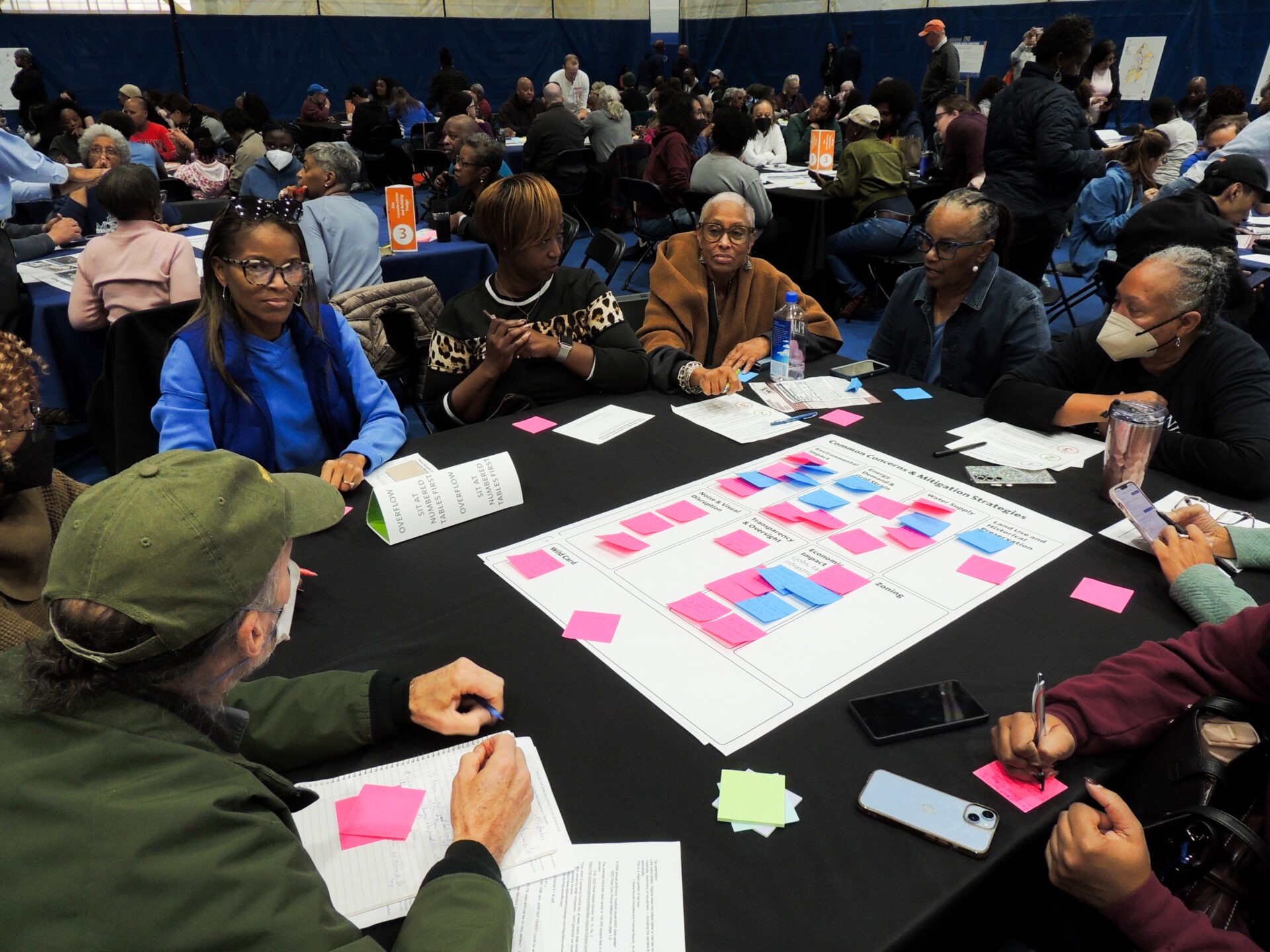
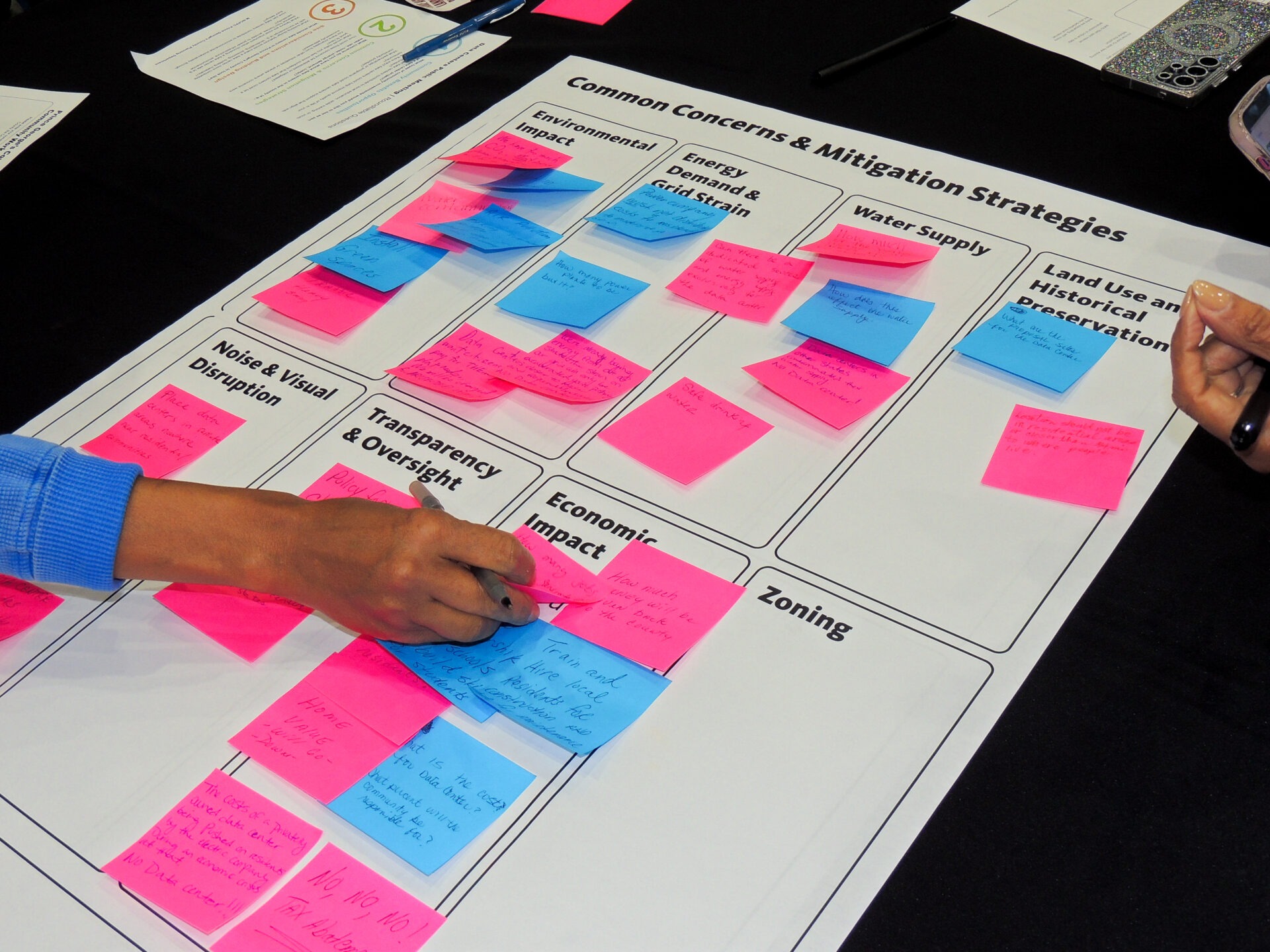
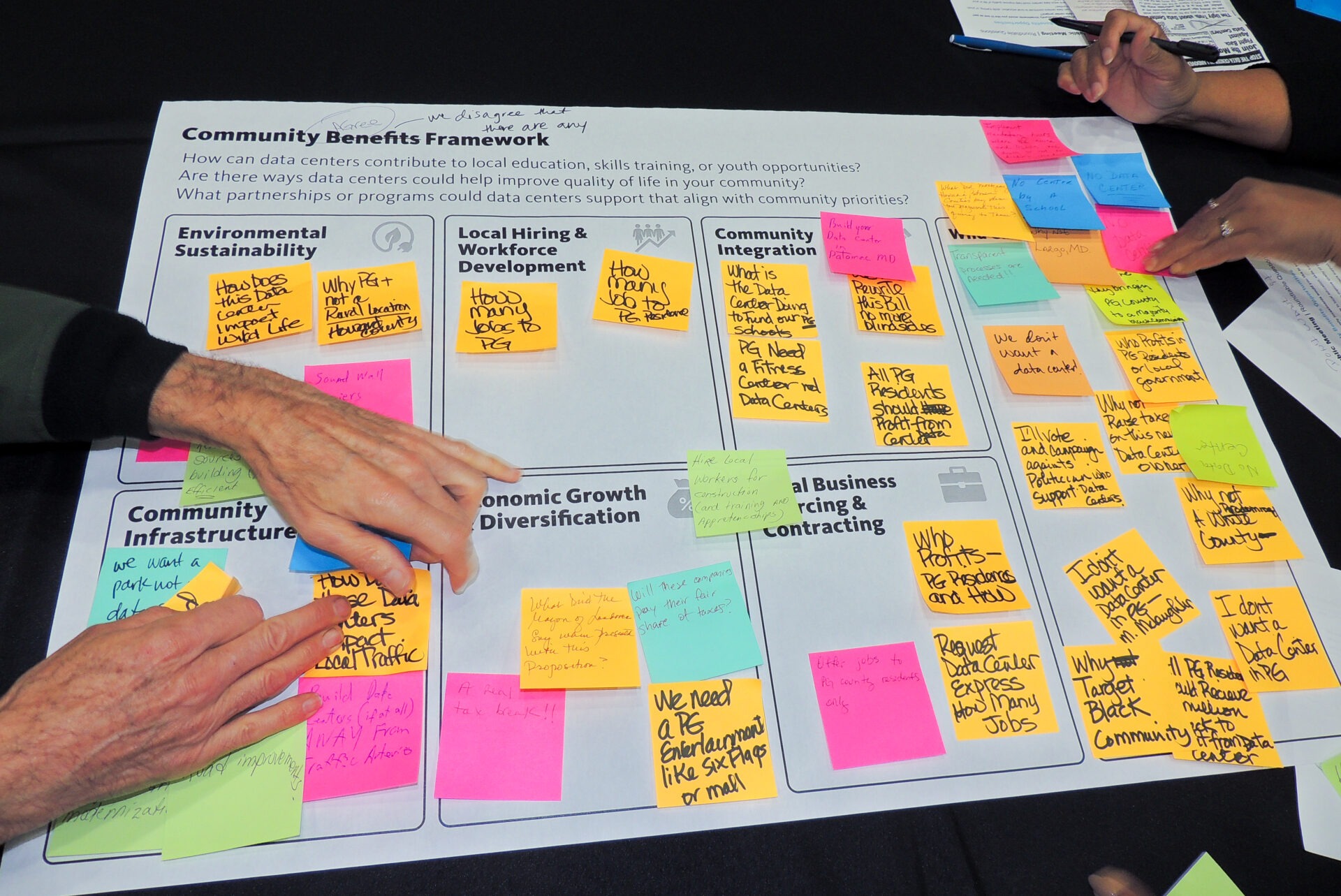
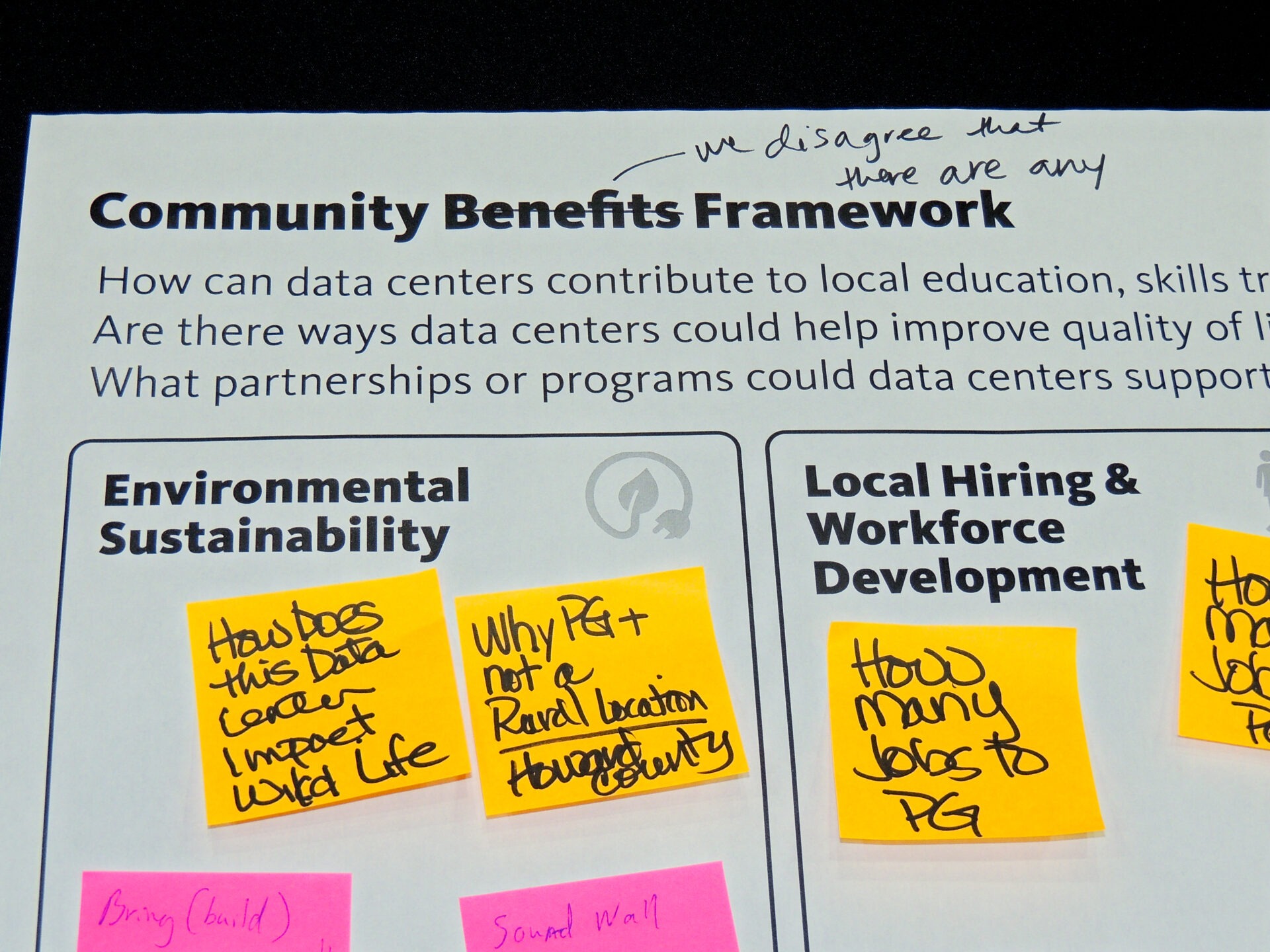
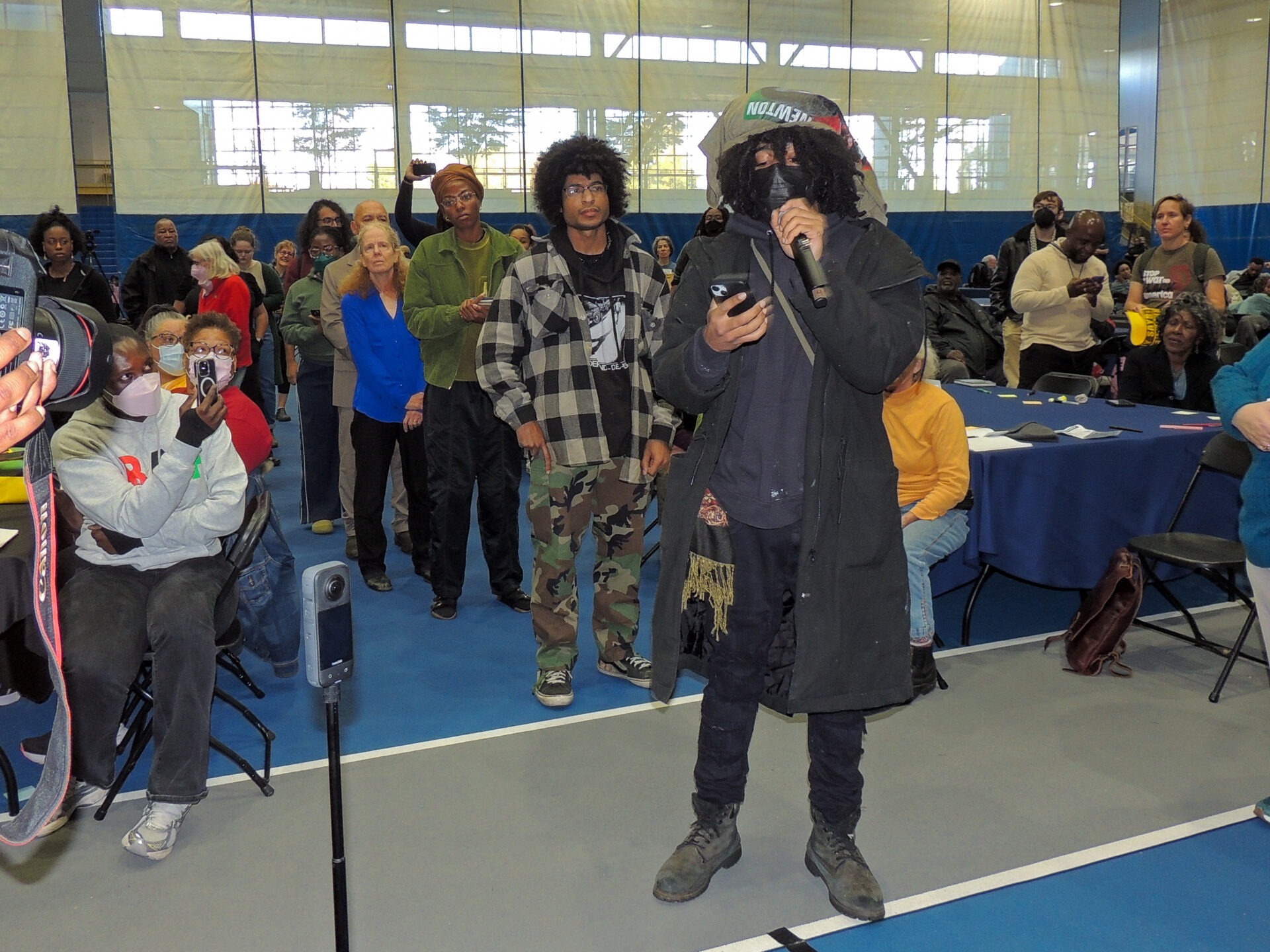
Each table was then meant to switch their posters and discuss the concerns written by their counterparts. However, the activity was interrupted mid-rotation as a few attendees in the back of the gymnasium started chanting “Let us talk!” in unison. The chant quickly spread across the space, accompanied by clapping, stomping, and fists banging on the tables.
This led to the council representatives making an abrupt transition into an unplanned open mic in which dozens of attendees lined up to voice their questions, concerns, and frustrations.
Earlier that morning, attendees were met with the Party for Socialism and Liberation, a political activist organization, protesting the data center in front of the entrance.
Herbert Jones, one of the protest speakers and a member of the South County Environmental Justice Coalition, gave his stance on the tentative development project.
“I’m more focused on the critical issue of zoning because, right now, data centers can be located in residential zones. The data center being proposed at the Landover site is inappropriate. My organization is not against data centers, but we are focused on appropriate location and the footprint size of the data centers.”
He also expressed concerns about the financial impact of this project. “The economic effects are going to be tremendous. It is without saying, your electric bill and your water bill will increase unless the council puts in protections and makes sure that the people who build and own the data center pay for [everything].”
One resident from Hyattsville, Maryland spoke on the larger implications of this development. “The environmental racism of this being put in Landover is incredibly obvious. The thing that stood out the most was the idea of ‘how can we leverage things to make this tolerable’, and I didn’t move to Prince George’s County in 2014 to tolerate where I live.”
A lifelong resident of Cheverly, Maryland expressed her frustrations with the meeting itself. “This whole process was designed to pacify residents. They brought us here today, had us talk in little groups, so that we can feel better, but not to solve any problems,” she said.
“There’s no facilitator who’s been able to provide concrete data or real solutions to our questions about environmental damage. And this is all in service of AI and the AI data centers that’s been going up all over the country.”
The few supporters of the data center project present at the meeting were not well-received by the majority.
Steven Johnson, a telecommunications engineer, also gave his thoughts on the positive impact he believes this project will bring.
“I’m for the data center simply because of the economic benefit of bringing it to the county. They think the jobs that are created, once the data center is built, will go away. No, those are skills that those kids and those people have for life,” he said. “There’s a lot of buzzwords being thrown around like temporary jobs and environmental racism. Those are all emotional weapons. They don’t talk about the tangential businesses that will spring up around this data center.”
On September 16, a county executive and council moratorium temporarily paused approvals for new data centers, which will expire in March of 2026 unless the council passes new legislation.
In their final address of the meeting, Councilwomen Wala Blegay and Krystal Oriadha revealed that, while the council has agreed to let the data center task force run its course before introducing additional legislation, there are plans to introduce a bill that will repeal the fast-tracking of the data center in January.
After the meeting, Oriadha shared her personal thoughts on the issue.
“I’m not for data centers anywhere in the county,” she said. “I, personally, will be working towards legislation that bans data centers. I don’t know if that will pass, because it has to be the will of the body as a whole. But I think everyone will be moving towards legislation that they think makes sense.”